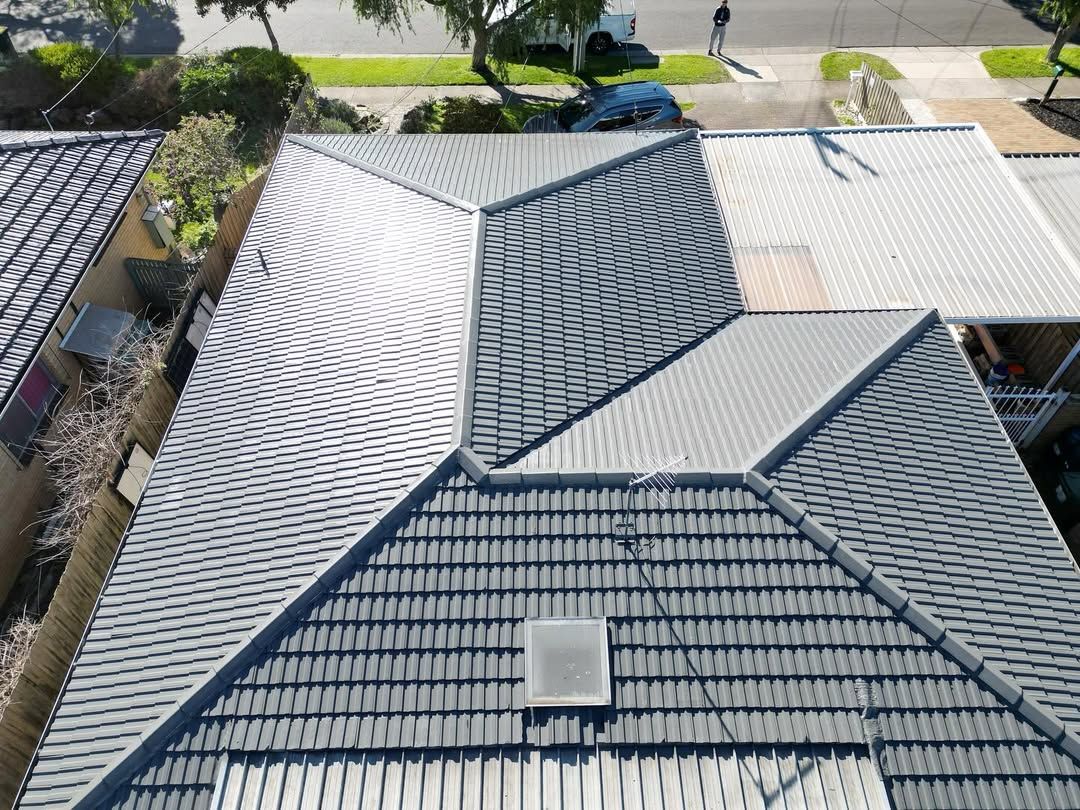





A roof protects more than a home; it protects its long-term value. It endures pressure from weather exposure, installation detailing, surface deterioration, drainage failure, insulation gaps, and biological activity. Most homeowners search for the average lifespan of a roof, or ask how long does a roof last, but lifespan is not decided by age alone. It is determined by how quickly weaknesses develop and how early they are addressed through maintenance or targeted upgrades, such as roof painting and roof restoration in Melbourne.
In Melbourne’s climate, roofs face high UV periods, cold nights, storm exposure, shade-induced moisture, and coastal-adjacent corrosion triggers. When these factors compound, roof longevity shortens. When checked early and managed with professional care, roof durability expands well beyond standard projections, reinforcing both roof longevity and functional reliability.
How Climate Changes and Hidden Issues Decide Longevity
Melbourne’s unique seasonal profile drives intense UV periods, cold overnight contraction, storm impacts, shaded moisture retention and coastal-adjacent oxidation triggers. When these stress factors combine without early intervention, the roof's lifespan shortens significantly. When inspected early and managed with professional care, roofs adapt to environmental pressures, delivering durability far beyond standard online projections. Here are some of the structural factors that impact roof longevity:
1. Roofing Material Sets the Potential Life Range
A roof’s lifespan starts with the materials used. Australian roofing systems include coated steel roofs like Colorbond roofing, concrete tiles, and terracotta tiles. These materials are highly durable when installed correctly.
A coated steel roof, such as Colorbond, stays structurally strong under Australian conditions. Its corrosion-resistant technology and thermal stability make it a trusted choice in urban centres like Melbourne. Tile roofs fare even better in durability timelines. Concrete tiles are cost-effective and structurally tolerant. Terracotta tiles are often installed on heritage and long-standing homes because they deliver generational resilience when well supported.
While metal roofs usually reach 30–50 years of functional performance, tiled roofing systems can exceed 50–100+ years when bedding, pointing and valley drainage are renewed at proper intervals.
2. UV and Thermal Cycling Accelerate Surface Fatigue
Melbourne experiences long summer UV exposure and colder winters. UV erodes paint films, roof primers, metal ridges, and tile surface seal layers over time. Thermal cycling, when a roof expands in daytime heat and contracts at night, forces sheet overlap movement, loosens tile bedding, retracts flash bonding, and fatigues pointing compound on ridge caps.
On metal roofing, thermal movement introduces stress at sheet overlap points and fastener lines. On tiled roofs, repeated thermal shifts can loosen tile alignment, ridge bedding and mortar anchor stability.
These effects significantly elevate lifecycle stress if membranes, sealants and flash density were not mapped to Melbourne weather loads during installation. Interiors without roof insulation experience even stronger heat transfer, worsening fastener hardening and overlap movement.
3. Drainage Architecture Directly Influences Roof Longevity
The number one reason roofs fail early is unmanaged water retention. That water retention rarely comes from rain alone; it comes from compromised drainage exit systems.
Gutters clogged with organic debris overflow onto fascia boards or travel back under metal sheet overlaps. Roof valleys, when left without guards or regular clearing, can pool water beneath tiles, loosening bedding, increasing membrane sweat, and accelerating pitting on both metal and tiles.
Melbourne homes often collect more leaf fall in autumn and damp sediment in winter-heavy transitions. When gutters or valleys trap this moisture, it erodes the roofing underlayment faster, reducing roof longevity well before external materials visually show wear.
For a comprehensive resource on preparedness and planning for restoring early drainage issues, roofing design, costs, warranties and timeline considerations, explore Factors to Consider Before Undertaking a Roof Restoration for deeper insights into restoration strategy.
4. Installation Quality and Durability Signal
Roof installation determines lifecycle durability. A roof poorly sealed today becomes a failure point years earlier than expected.
Australian roofing installation standards, homeowner construction guidance and building compliance frameworks are shaped by industry bodies such as the Housing Industry Association (HIA) and the Master Builders Association (MBA). Compliance is reinforced through the National Construction Code (NCC).
Inadequate flashing coverage near chimneys, skylights, parapets or roof penetrations leads to early leaks. Under-sealed valleys trap moisture far longer. Insufficient fastening density invites sheet uplift under strong wind-mapping zones. Poor ridge alignment cracks bedding underneath and creates premature cavity damp pressure.
Roofs installed with mapped detailing, redundancy flash lines, sealed ridges, storm-resistant fastening and cavity pressure balance outlast standard timelines by decades.
5. Roof Insulation and Ventilation Regulate Internal Roof Weather Systems
Roof insulation is not just about energy cost; it is a lifecycle stabiliser. Interiors without roof insulation overheat inner membranes in summer and sweat water back up into ceilings in colder months. Without balanced roof ventilation, vapour remains trapped even in insulated cavities.
A roof without airflow becomes a condensation engine. A roof without insulation experiences amplified membrane heating. The best performing roofs treat insulation and ventilation as one engineered durability system.
Building compliance, insulation standards and roof ventilation detailing in Australia fall under the National Construction Code (NCC).
Annual inspection, vent balancing, and insulation alignment are recommended, especially before sealing or repainting cycles begin.
6. Biological Growth Reduces Roof Longevity Faster Than Age Alone
Moss, lichen, algae and mould trap water on roofing surfaces long after rain stops. Biological patches embed into micro-cracks on metal primers or porous tile surfaces. This speeds up tile granule erosion, creates surface pitting, weakens ridgelines and drives membrane damp pressure under tiles.
Metal roofs corrode underneath algal colonies at overlap points and screw lines. Tile roofs erode from internal moisture locked beneath their porous granule crown layer.
Roof cleaning should apply a gentle removal wash rather than aggressive high-pressure blasting that strips tile bedding and surface protectors.
7. Protective Roof Painting Shields Premature Rust and Wear
Roof paint defends against UV stress, micro-cracks, water load retention, and rust propagation. Roof painting in Melbourne adds 10–15+ years of roof life when applied before rust permeates below surface primers or pointing erodes deeply beneath tiles.
Acrylic coatings and protective primers shield metal ridges, seal tile micro-cracks, enhance hydrophobic drainage behaviour, and reduce sheet heating amplitude throughout Melbourne summers.
Painting and sealing early interrupts corrosion cycles, stabilises surfaces, and improves roof longevity.
8. Roof Restoration Will Help in Lifespan Extension
Roof restoration in Melbourne intercepts lifespan failure by stabilising weak points, replacing corroded ridges and sheets early, renewing bedding and pointing, resealing flash lines or replacing them, tightening or upgrading fasteners, and clearing roof valley drainage architecture.
Restoration works best when the underlayment is still firm, the rafters remain dry, and structural boards are not softened by overflow or trapped condensation.
9. Tree Shade Introduces Damp Pressure That Accelerates Roof Ageing
Heavy shade and overhanging trees stop consistent sunlight from drying. Roof sections remaining wet for too long develop biological colonies. Wind-driven branches or seed pods compromise flashing lines, ridges or membrane bonding compound.
Trimming tree overhang reduces debris drop into valleys and gutters and prevents puncture-based flash seep lines during storms.
Present shade and tree coverage as biological + moisture risk, not aesthetic landscaping alone.
Conclusion
A roof lasts longest when resilience, detailing, drainage, and early vulnerability interception shape its lifecycle plan, not age alone. Material choice establishes potential lifespan, but protection layers, cavity airflow, fastener health, UV defence systems, and professional upgrades such as roof painting and roof restoration in Melbourne determine the roof’s success in real-world Melbourne seasonal cycles.
Homeowners who invest in structured roof care often see their roofing system exceed standard lifespan projections by decades. Early inspections, fastener checks, gutter clearing, and professional coatings or restoration pathways reinforce longevity before internal membranes or fascia boards weaken. When done strategically and professionally, roofs do not merely age; they evolve to withstand the climate in which they are built.
With over 25 years of specialised local knowledge, it remains committed to protecting Melbourne homes through precision workmanship and long-term roof resilience solutions. For homeowners planning roof upgrades or assessing lifecycle triggers, Melbourne Quality Roofing delivers informed roofing care pathways that increase durability and extend roof lifespan effectively.
FAQs
1. What’s the typical lifespan of a roof in Melbourne conditions?
Melbourne weather tests each roofing material differently. Metal roofs often reach 30–50 years, while concrete or terracotta tiles can exceed 50–100+ years when cared for early.
2. How long does a roof last if biological growth and drainage issues are unchecked?
Even premium roofing loses 40–60% of its expected lifespan when moss traps moisture, flashing cracks seep water back in, or gutters overflow into fascia boards or cavities.
3. How to prolong the life of a roof?
Maintain gutters twice a year, inspect annually, repair flash lines early, remove moss gently, repaint or coat mid-life, and restore structural weak points professionally before leaks worsen.
4. Does roof painting Melbourne help maintain roof longevity?
Yes, 4-coat roof painting solutions commonly extend roof longevity by sealing micro-cracks, reducing surface heating, delaying rust spread on metal roofs and reinforcing hydrophobic drainage.
5. What triggers roof restoration planning in Melbourne homes?
Persistent lichen patches, cracked flashing, sheet uplift, loose ridge bedding, gutter overflow stains, or deteriorated pointing signal restoration-readiness, particularly when underlayment is still firm.
6. Is restoration smarter than replacement for roof longevity?
If structural boards are firm and internal membranes remain dry, restoration adds decades to roof longevity at a lower lifecycle cost than replacing too early.