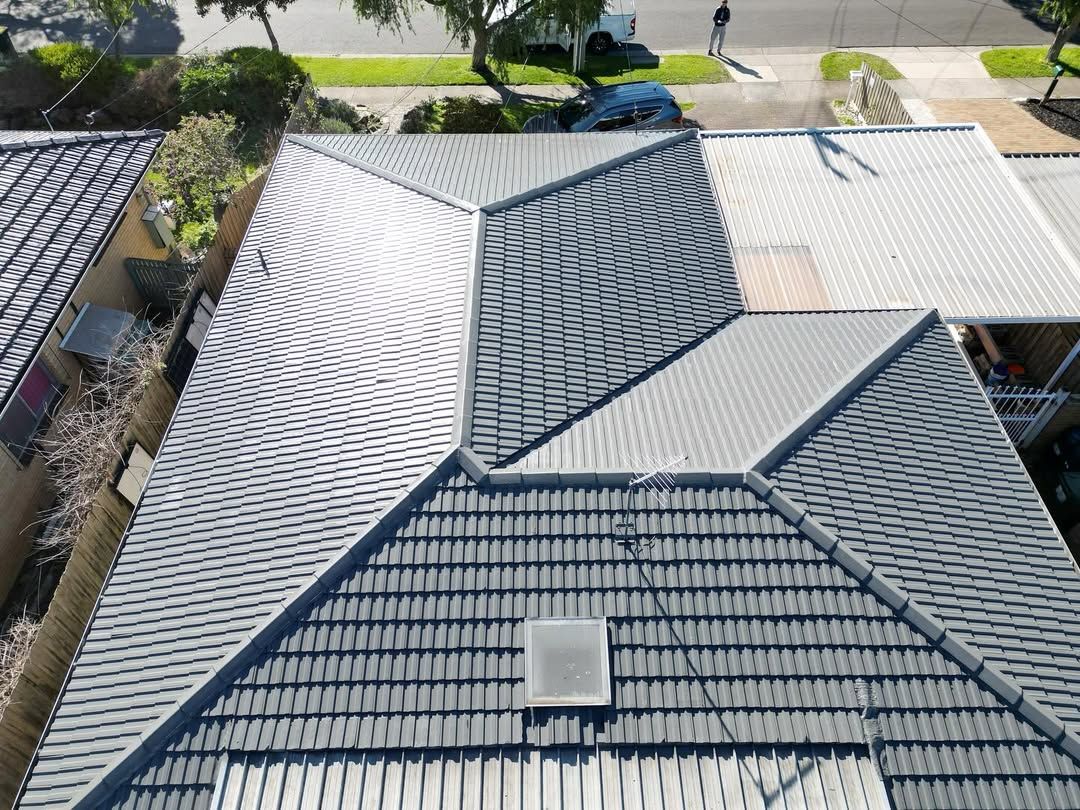






Autumn is the most important season to check your roof in Melbourne. The warm, dry weeks of March and April give way quickly to the wet, windy conditions that define Melbourne winters, and any weakness in the roof, whether that is a cracked tile, a blocked gutter, a failing ridge cap, or peeling paintwork, becomes a much bigger and more expensive problem once the rain arrives and stays.
A proper roof inspection checklist before winter is not about finding the obvious. It is about identifying the small issues that are quietly getting worse with every season.
Melbourne Quality Roofing, based at 35 Heany Park Road, Rowville, and reachable on (03) 9540 8865, has been completing roof inspections and repairs across Melbourne for over 35 years.
Our team works across Melbourne's eastern and south-eastern suburbs, and every autumn we see the same story, roofs that looked perfectly fine from the street, hiding months of damage that a simple inspection would have caught before it turned into a costly repair.
This roof inspection checklist covers every key area of your roof, what to look for in each one, and what the signs actually mean for your home heading into 2026.
Why Autumn Is the Right Time for a Roof Inspection in Melbourne
Melbourne summers are tough on roofs, the constant heat expansion and contraction quietly loosens ridge caps, cracks tiles, and wears down pointing. By autumn, that damage is sitting there waiting, and it's the perfect time to catch it before winter rain turns a small crack into a real problem.
Leaving a roof inspection until winter means working around rain, limited access, and wet surfaces, and it means that any damage found has already been exposed to wet weather while working on it. Autumn inspections also allow enough time to book roof repairs or a full roof restoration in Melbourne before the coldest and wettest months make the work more disruptive and urgent.
A proper roof inspection checklist before winter is not about finding the obvious, if you want a broader overview, our roof maintenance and inspection guide for Australian homeowners is a good starting point.
Autumn Roof Inspection Checklist for Melbourne Homes
Here are the checklist to consider:
1. Roof Tiles: Cracked, Broken, or Missing
Roof tiles are the first line of defence against rain. A single cracked or displaced tile is enough to allow water into the roof cavity, where it can damage insulation, timber framing, plaster ceilings, and electrical wiring before any visible sign appears inside the home.
What to check:
- Look for tiles that are visibly cracked, chipped, or dislodged from the ground level using binoculars if needed
- Check for tiles that are sitting unevenly, which often indicates movement underneath
- Look for dark staining or moss growth on individual tiles, which signals moisture retention and often points to a tile that is no longer shedding water properly
Terracotta tile roofs across suburbs, including Glen Waverley, Templestowe, and Doncaster, are particularly prone to cracking after summer heat cycles. A missing or cracked tile does not always need a full restoration. In many cases, targeted roof repairs resolve the issue at a fraction of the cost of a full job.
2. Ridge Caps: Pointing and Bedding Condition
Ridge caps run along the peak of the roof and seal the highest and most exposed point of the structure. They are held in place by mortar bedding and sealed with flexible pointing compound. Both deteriorate over time, and by autumn, a full summer of UV exposure and thermal movement often leaves the pointing cracked or the bedding loose.
What to check:
- From the ground, look along the ridge line for any caps that appear raised, shifted, or separated from the line
- Look for white or grey residue on tiles below the ridge line, which can indicate crumbling mortar washing down the roof
- After any strong wind event during summer or early autumn, check the ridge line specifically for displaced caps
Loose ridge caps are one of the most common findings during roof inspections across Melbourne's eastern suburbs. They are also one of the most straightforward repairs when caught early. A cap that has shifted but not fallen can be re-bedded and repointed. A cap that has come away entirely may have already allowed water entry.
3. Gutters and Downpipes: Blockage, Rust, and Sagging
Your roof and gutters are a team , even a roof in great shape can cause real damage if the gutters are blocked or broken, with water backing up into fascia boards, eaves, and even your foundations. With autumn leaf fall as heavy as it gets across suburbs like Blackburn, Camberwell, and Box Hill, gutters can block up fast just as winter rain is on its way.
What to check:
- Check gutters for leaf buildup, debris, and standing water, which indicates poor drainage or a blocked downpipe
- Look for rust staining on the outside of the gutter, which often signals internal rust and thinning of the gutter wall
- Check whether gutters are sitting level or sagging between brackets. Sagging gutters pool water rather than drain it
- Inspect the fascia board behind the gutter for soft spots, rot, or water staining
Homes across Melbourne's south-east that have older steel gutters should consider upgrading to Colorbond guttering as part of an autumn maintenance plan. Melbourne Quality Roofing provides Colorbond guttering and fascia cover across all service areas, combining function and longevity in one upgrade.
4. Roof Valleys: Blockage and Corrosion
Roof valleys are the channels formed where two roof planes meet. They carry significant volumes of water during rain events and are one of the most failure-prone areas of any roof. Debris accumulates in valleys faster than anywhere else on the roof, and the constant water flow accelerates corrosion in metal valley flashing.
What to check:
- Look for leaf and debris accumulation in the valley from the ground or from a safe vantage point
- Check for rust or discolouration in the valley flashing, which indicates the metal is thinning
- Look for cracked or displaced tiles adjacent to the valley, as these are often dislodged by water pressure during heavy rain
Valley issues are responsible for a significant proportion of roof leak repair calls Melbourne homeowners make after the first major winter rain event. Finding and clearing a valley in autumn costs a fraction of what a leak investigation and ceiling repair costs in July.
5. Roof Paintwork and Coating Condition
For both terracotta and concrete tile roofs, the condition of the surface coating directly affects how the roof performs. Faded, peeling, or chalking paint no longer protects the tile surface, which allows moisture absorption, moss growth, and accelerated tile deterioration. Autumn is the ideal time to assess coating condition before winter further degrades exposed surfaces.
What to check:
- Look for significant fading, particularly in patches, which indicates the coating has broken down
- Check for peeling or flaking paint on the tile surface, visible from the ground on lower roof sections
- Look for moss, lichen, or algae growth, which takes hold when the protective coating has worn through
- Check the colour consistency of the roof surface. Patchy or uneven colour indicates areas where the coating is at different stages of wear
Roof painting in Melbourne is not just cosmetic. A properly applied coating system protects tiles from moisture absorption, reduces heat transfer into the roof space, and extends the service life of the roof by years. Melbourne Quality Roofing's roof painting service in Melbourne uses a four-coat colour system with a 10-year guarantee and a proven track record across more than 2,000 completed projects.
6. Flashing Around Chimneys, Skylights, and Vents
Flashing is the metal strip or membrane used to seal the junction between the roof surface and any penetration through it: chimneys, skylights, exhaust vents, and plumbing pipes. When flashing lifts, cracks, or corrodes, water enters through the gap and typically runs down the inside of the ceiling before appearing as a stain, often metres away from the actual entry point.
What to check:
- Look at the base of any chimney for lifted or separated flashing
- Check around skylights for gaps in the seal or rust on the surrounding flashing
- Inspect any visible vent pipes emerging from the roof for cracked or deteriorated rubber seals at the base
Flashing failures are frequently misdiagnosed because the leak appears at a different location to the actual entry point. During an autumn roof inspection and repair assessment, the team at Melbourne Quality Roofing checks all penetrations as part of a standard inspection, not just the most visible ones.
7. Roof Ventilation: Whirlybirds and Exhaust Vents
Roof ventilation affects both the summer and winter performance of your home. In summer, trapped hot air in the roof cavity drives up cooling costs. In winter, poor ventilation allows moisture to accumulate in the roof space, which can cause timber framing to rot and insulation to degrade over time.
What to check:
- Check that whirlybirds or turbine ventilators are spinning freely and not seized or visibly damaged
- Look for rust on the vent body, which can indicate internal corrosion and reduced function
- Ensure roof vents are not blocked by debris, bird nests, or accumulated insulation
Melbourne Quality Roofing installs and services roof ventilators and whirlybirds rated for wind speeds up to 200 km/h and built for a lifespan of over 15 years.
8. Colorbond Roof Condition
Colorbond roofs require different inspection criteria to tiled roofs. Rather than tiles and pointing, the key concerns are panel integrity, fastener condition, and coating status.
What to check:
- Look for any panels that appear lifted, buckled, or separated at the seams
- Check fasteners and screws along the roof line for rust or missing caps, which allow water to enter around the fastener hole
- Inspect the paint surface for chalking or fading, which indicates UV degradation of the Zincalume substrate is accelerating
- Check flashings at ridges, edges, and any wall junctions for separation or corrosion
Colorbond roofs across newer builds in Wheelers Hill, Rowville, and Berwick often present fastener and flashing issues before the Colorbond panels themselves show wear. A targeted autumn check catches these early. Melbourne Quality Roofing provides Colorbond roof restoration and new Colorbond roofing across all service areas.
Signs Your Roof Needs Repair: What to Watch for Inside the Home
A roof inspection is not limited to the exterior. Several of the clearest signs your roof needs repair show up inside the home first:
Water stains on ceilings or walls. Yellow or brown rings on a ceiling are almost always the result of a roof leak. The stain marks where water has pooled, but the entry point is typically at a different location on the roof above.
Visible light in the roof cavity. If you can access the roof space, check for any daylight visible through the roof structure. Light means there is a gap large enough for water entry.
Mould or mildew smell in rooms below the roof. Moisture in the roof cavity from a slow leak creates mould growth in insulation and on timber framing, which produces a persistent musty smell in the rooms below.
Peeling paint or bubbling plaster on interior ceilings. These are signs of moisture working through from above over an extended period.
Increased energy bills without explanation. A compromised roof allows heat to escape in winter and enter in summer, which forces heating and cooling systems to work harder. Damaged insulation caused by roof moisture is a frequent contributing factor.
If any of these signs are present in your home across suburbs including Bayswater, Wantirna, Boronia, or Belgrave, contact Melbourne Quality Roofing on (03) 9540 8865 for a free site inspection and quote before the winter rain season begins.
Autumn Roof Inspection Checklist: Quick Reference
|
Area |
What to Check |
Risk if Ignored |
|
Roof tiles |
Cracks, breaks, displacement, moss growth |
Active roof leak, ceiling damage |
|
Ridge caps |
Lifted caps, crumbling pointing, loose bedding |
Water entry at the highest roof point |
|
Gutters and downpipes |
Blockage, rust, sagging, fascia rot |
Overflow, wall and foundation damage |
|
Roof valleys |
Debris buildup, corroded flashing |
Concentrated water entry during heavy rain |
|
Roof paintwork |
Fading, peeling, moss growth, uneven colour |
Accelerated tile deterioration and moisture absorption |
|
Flashing |
Lifted or separated seals at chimneys and skylights |
Hidden leak that appears far from the entry point |
|
Roof ventilation |
Seized whirlybirds, blocked vents |
Moisture buildup in roof cavity, higher energy costs |
|
Colorbond panels |
Buckled panels, rusted fasteners, flashing separation |
Panel-level water entry and substrate corrosion |
Conclusion
An autumn inspection now is the most cost-effective thing you can do for your roof before Melbourne winter arrives. Small issues found in March or April are simple repairs. The same issues left until June become active leaks, ceiling damage, and emergency call-outs.
At Melbourne Quality Roofing , our every complete roof restoration in Melbourne includes a complimentary 12-month follow-up inspection upon request, with photo evidence provided. All work is fully insured and backed by a 10-year guarantee.
Call Melbourne Quality Roofing and book your free site inspection and quote today!
FAQs
1. What are the most important items to check when inspecting your roof?
Focus on the ridge caps, roof tiles, gutters, valley flashing, and any penetration points around chimneys or skylights , these spots are where the vast majority of leaks start.
2. What is the most common issue found during a home inspection?
Cracked or deteriorated ridge cap pointing comes up more than anything else, simply because it sits at the top of the roof taking a beating from sun, wind, and rain every single day.
3. How often should a roof be inspected in Melbourne?
Once a year is the general rule, with autumn being the sweet spot, and if you've just had a big storm, don't wait, get someone up there sooner rather than later
4. What is the difference between a roof inspection and a roof restoration?
An inspection tells you what's going on up there, while a restoration is the full treatment , clean, repoint, replace broken tiles, and a fresh coating. Not every roof needs the whole works, which is why we always inspect first.
5. How long does a roof restoration take in Melbourne?
Most jobs are done within three to four days, though larger or more damaged roofs may need a little extra time.
6. What does roof painting cost and how long does it last?
Pricing depends on your roof's size and condition, but our four-coat system is guaranteed for 10 years and built to go well beyond 20 with proper preparation.
7. Can an inspection tell me if I need a full replacement or just repairs?
Absolutely, a good inspection gives you a clear, honest picture of what your roof actually needs, so you're never spending more than necessary.