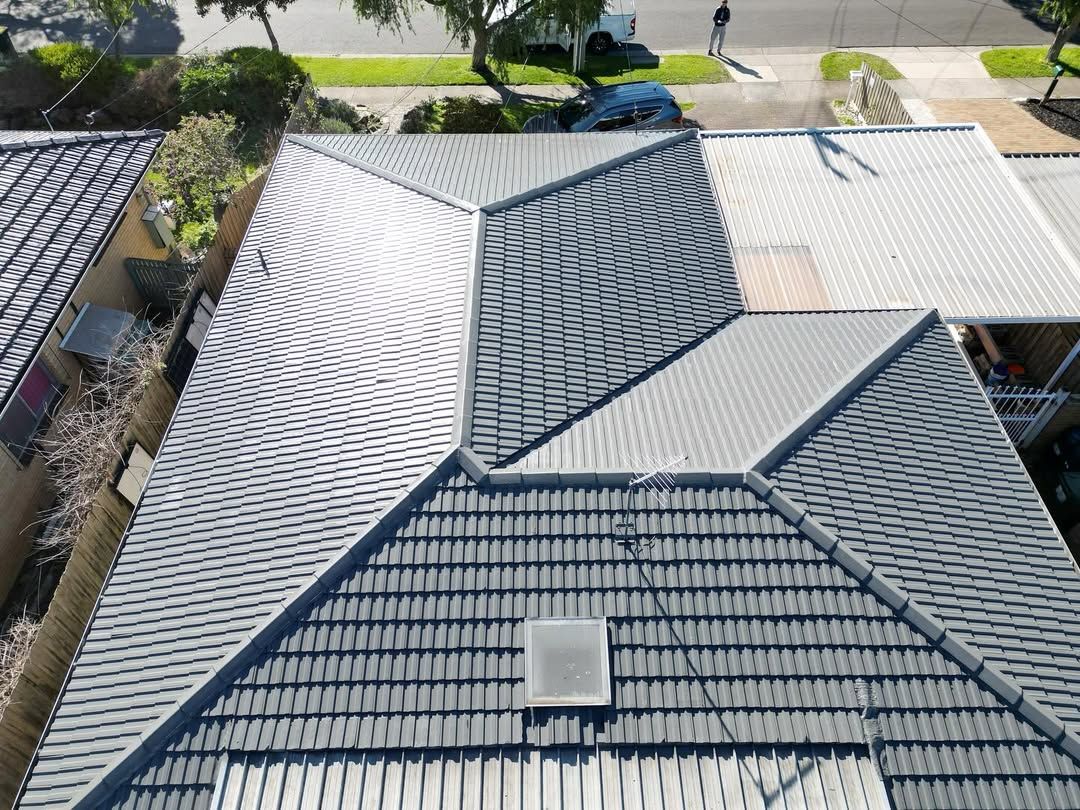






This guide covers the roof maintenance steps that matter most during winter, the warning signs to watch for while the weather is at its worst, and what to do if something goes wrong mid-season.
Why Does Melbourne Winter Put Roofs Under More Pressure?
Melbourne's winter rainfall pattern is different from a summer storm. Summer rain tends to arrive hard and fast, then clear. Winter rain in Melbourne is sustained, often lasting days at a time, with lower temperatures that slow evaporation and keep moisture on and in roofing materials for extended periods.
This sustained moisture exposure is what makes winter the hardest season for a roof that has not been properly maintained:
Cement and terracotta tiles
Tiles absorb moisture over time. When ridge caps lose their bedding or pointing, water enters the mortar underneath and works its way into the ceiling space. What presents as a minor discolouration in autumn becomes an active leak in winter once rainfall is sustained enough to saturate the entry point.
Colorbond and metal roofing
They face distinct winter challenges. Where the protective coating has worn or rusted, sustained moisture accelerates corrosion. Lap joints and flashings that have lifted slightly allow water to wick under the sheet during prolonged rain in a way that a short summer shower would not. A Colorbond roof restoration addresses worn coatings and lifted flashings before winter rain has the chance to exploit them.
Gutters and downpipes
Winter is their highest-demand period. Leaf fall in autumn clogs gutters, which then overflow rather than divert. An overflowing gutter against a fascia board during a week of winter rain creates water ingress that has nothing to do with the roof itself, but presents identically to a roof leak from inside the house.
Roof ventilators (whirlybirds)
Ventilators play an underappreciated winter role. In summer, they remove hot air. In winter, they remove moisture and condensation from roof cavities, preventing mould growth and timber deterioration caused by wet winters in poorly ventilated roof spaces.
5 Roof Maintenance Tips to Follow During Melbourne Winter
Below are the 5 tips to keep in mind and follow during winter.
Tip 1: Keep gutters clear throughout the season, not just at the start
Gutters cleared in April can be blocked again by July. Melbourne's native trees shed leaves across the entire cool season, and a single heavy storm can push enough debris into a gutter to create a partial blockage within days. Check gutters during and after any sustained rainfall event, not just at the seasonal changeover. A blocked gutter in winter is not a nuisance; it is a water damage risk.
Tip 2: Watch for water stains on interior ceilings after rain
New water stains on ceilings, or existing stains that darken after rain, are the most reliable indicator of an active roof leak. The stain will almost never appear directly beneath the entry point, as water travels along rafters and battens before dripping through. Do not delay in addressing a new ceiling stain; water damage to plaster, insulation, and timber can progress quickly in cold, damp conditions.
Tip 3: Check ridge caps from ground level after high winds
Ridge caps sit along the apex of a tiled roof and are its most exposed point. Bedding mortar beneath ridge caps deteriorates with age and weather cycles. High winter winds accelerate movement in caps that are already loose, and a dislodged or cracked cap during sustained rain is one of the most common causes of roof leaks in Melbourne homes. A visual check from ground level after any significant wind event takes minutes and can prevent a much larger problem.
Tip 4: Do not ignore slow-draining downpipes
A downpipe that drains slowly in dry weather will back up completely during heavy winter rain. When a downpipe backs up, water pools in the gutter, overflows toward the fascia, and can work its way under eaves and into ceiling spaces. If a downpipe is sluggish, it has a partial blockage that needs clearing before the next significant rainfall event, not after.
Tip 5: Look for moss and lichen growth on tile surfaces
Melbourne's cool, damp winters are ideal conditions for moss and lichen growth on cement and terracotta tiles. Both retain moisture against the tile surface, accelerating deterioration of the tile and the pointing beneath ridge caps. Moss growth is also a visual signal that cleaning and treatment is overdue, as it indicates sustained moisture is sitting on the roof surface rather than running off cleanly. Left untreated, heavy moss accumulation can block valleys and gutters, creating drainage problems during heavy rainfall.
What Are the Warning Signs of a Roof Problem During Winter?
Some roof issues that develop or worsen during winter are visible from inside the home without any ladder or roof access.
1. Detecting water stains or wet patches on ceilings.
Any new mark that appears or darkens after rain should be investigated. Do not wait for it to resolve; it will not.
2. Finding mould growth in the ceiling space or on walls near the roofline.
Mould growth in a Melbourne home in winter frequently traces back to sustained moisture entry at the roof level or inadequate roof ventilation rather than condensation alone.
3. Noticing a musty smell in the roof cavity.
A musty odour from above indicates moisture has been accumulating in the roof space for some time. This is rarely visible from inside the home until it has progressed significantly.
4. Identifying peeling paint or bubbling on interior ceilings.
Paint bubbling on a ceiling is caused by moisture beneath the paint surface, which in most cases traces to water ingress through the roof.
If any of these signs appear during winter, the right action is a professional roof inspection, not a wait-and-see approach. Water damage compounds quickly in cold, wet conditions.
What Roof Work Can Be Done in Winter?
This is a question Melbourne Quality Roofing hears every winter.
Here is the answer.
-
Urgent repairs should not wait for spring.
An active roof leak in winter means every rainfall event extends the water damage to plaster, insulation, and timber.If there is an identified leak or a displaced ridge cap, getting it repaired promptly costs far less than addressing the secondary damage that accumulates over a full winter of active water ingress.
-
Full roof restorations are better timed for spring.
Melbourne Quality Roofing's full restoration process, which includes high-pressure cleaning, ridge cap re-bedding and repointing with flexible pointing, valley replacement where required, and the four-coat Regent paint system, is best completed in dry, mild conditions. Spring is the recommended season for a full restoration. Winter is the season for identifying what the restoration will need to address.
-
Inspections can be done any time.
A professional roof inspection does not require dry weather. Melbourne Quality Roofing conducts inspections year-round across Melbourne's south eastern and eastern suburbs, providing a written assessment of roof condition and a clear recommendation on what work, if any, is required.
Why Choose Melbourne Quality Roofing
Key Takeaways
Melbourne's winter weather can make existing roof problems worse because of constant rain and moisture. Checking your gutters regularly throughout winter helps prevent blockages and water overflow. Keep an eye out for new ceiling stains, musty smells in the roof space, or mould near the ceiling, as these can be signs of a roof leak. After strong winds, look at your ridge caps from the ground to make sure they haven't moved. If you notice any roof damage, don't delay repairs, as water damage can quickly become more expensive. While a full roof restoration is usually best done in spring, roof inspections can be carried out at any time of the year.
FAQs
2. Can a roof leak get worse during winter?
5. How do I know if my Colorbond roof needs attention in winter?
Key indicators for Colorbond roofs include visible rust spots, lifted or separating lap joints, water marks near downpipe connections, and interior ceiling stains after rain. Colorbond roofing in good condition should shed water cleanly without any entry points. If rust is present, it should be treated before the corrosion spreads further.
Moss itself does not directly cause leaks, but it retains moisture against the tile surface, accelerates tile deterioration, and can accumulate in valleys and gutters, affecting drainage during heavy rain. Heavy moss coverage is also a reliable indicator that the roof surface needs professional cleaning and treatment. Melbourne Quality Roofing removes moss through high-pressure cleaning as part of the roof restoration process.