



Jun 29, 2026
A faded roof is one of the most common things Melbourne homeowners notice when they start thinking about their property maintenance, and it is almost always more than a cosmetic problem. If you're considering roof restoration Melbourne services, fading is often an early sign that your roof's protective coating is wearing away and needs professional attention.
That chalky, washed-out look tells you the protective coating on your tiles or Colorbond sheets has started to break down, and once that happens, UV radiation, water, and organic growth have a much easier time doing real damage.
Understanding why roof fading happens and what a proper repaint can do about it is the most useful thing you can know before you call anyone.
At Melbourne Quality Roofing, we've restored roofs across Melbourne for more than 35 years.
In this guide, we will explain why roofs fade, how professional roof painting restores it, and when it's time to take action.
5 Reasons Your Roof Is Fading (And What Each One Means)
Every faded roof has a cause, and the cause matters because it affects what the repair needs to look like.
These are the five most common reasons we find when we inspect a Melbourne roof that has lost its colour.
1. UV Radiation Is Degrading the Paint Bonds
UV exposure is the primary driver of roof fading on Melbourne homes. Melbourne's latitude delivers intense ultraviolet radiation for most of the year, and your roof absorbs it directly without any shade or relief. UV rays break down the chemical bonds in roof paint over time, causing the pigment to degrade and the surface to lose saturation.
This is a slow process but a relentless one, and no standard paint job will hold its colour indefinitely without a UV-resistant topcoat system designed for the Australian climate.
2. Oxidation Has Turned the Surface Chalky
When oxidation sets in, the binders in the paint film break down, and the surface starts to powder. Run your palm across a faded tile, and you will often find a white or grey chalky residue on your hand. That is oxidised roof paint, which indicates the protective layer is gone.
Once the surface is oxidised, water, dirt, and moss penetrate the tile far more easily, accelerating deterioration beneath the visible surface and shortening the time before structural issues appear.
3. Heat Expansion and Contraction Have Cracked the Coating
Melbourne's climate swings from scorching summer days above 40°C to cold, wet winters below 10°C. Roof tiles and Colorbond sheets expand in heat and contract in the cold, and that constant thermal movement creates micro-cracks in the paint film over time.
Those hairline fractures let moisture under the coating, where it works between the tile surface and the paint layer, accelerating the fading and eventually causing the coating to lift and peel in larger sections.
4. Moss, Lichen, and Algae Are Working Into the Surface
Organic growth is both a symptom of a compromised coating and an accelerant of further damage. Once the protective layer weakens, moss and lichen take hold much more easily.
Their root structures physically penetrate the tile surface, lifting paint from below and creating the uneven, patchy discolouration that makes a roof look far older than it is.
A faded, moss-covered roof is not just an aesthetic problem. The biological acid that lichen produces slowly etches into the tile, and that damage does not reverse with paint alone.
5. The Original Paint System Has Reached the End of Its Life
Many Melbourne homes that were painted or restored more than a decade ago have standard single-coat or two-coat systems that were never designed to last in Australian UV conditions.
If your roof was done with a basic product, the fading you are seeing is simply that system running out of performance life.
A proper four-coat system with the right primer and topcoat combination is built for a much longer service life.
Why Roof Fading Should Not Be Ignored
Fading rarely stays cosmetic for long, and how quickly it progresses gives you useful information about what action is needed.
Uniform fading across the whole roof usually means the paint has aged out evenly. This is the most straightforward scenario to address: a professional repaint with proper surface preparation and a quality paint system will restore both colour and protection. Patchy or uneven fading, by contrast, usually points to specific problem areas where water has pooled, organic growth has concentrated, or previous patchwork repairs used mismatched product.
A chalky residue confirms active oxidation and is a clear signal that the surface needs stripping back and recoating. If you are also finding cracked, flaking, or peeling paint, that is a more urgent situation. Exposed tile surface absorbs moisture directly, which can lead to tile face spalling over time, especially with older cement tiles. Detecting this early is important because the cost difference between a repaint and a partial tile replacement is significant.
How Does Professional Roof Repainting Restore Faded Colour?
A professional repaint is not the same as rolling on a fresh coat of colour. Done properly, it is a multi-stage process that rebuilds the protective system from the ground up, so the new colour lasts rather than just sitting on top of a compromised surface.
At Melbourne Quality Roofing, our roof painting process starts with a thorough high-pressure wash to remove all dirt, moss, lichen, and loose or oxidised paint.
Any cracked pointing or ridge cap mortar is repaired at this stage before the coating work begins, because painting over structural defects just locks them in place.
We then apply one coat of Maxi Primer to create a proper bonding base, followed by three coats of Regent brand water-based acrylic paint. This four-coat system is available in 42 colours and is rated safe for rainwater collection.
The reason the four-coat system matters is straightforward: a single topcoat or basic two-coat application does not build enough film thickness to provide lasting UV resistance. Each coat in our system serves a specific purpose.
The primer bonds to the tile substrate. The first and second topcoats build depth and UV resistance. The third topcoat seals the system and delivers the final colour you see.
The result is a surface that holds its colour for up to 20 years rather than fading again within three to five years as cheaper applications tend to do.
If your roof is structurally sound and the main issue is oxidised colour and surface breakdown, a full roof restoration that incorporates our painting system is typically the right scope. If the structure needs attention too, ridge cap rebedding, repointing, tile replacement, and valley repairs happen first, and then the painting system goes on to a sound base. Our team will tell you exactly which scope applies after a free on-roof inspection.
How Roof Repainting Works for Colorbond Roofs
Colorbond roofs fade differently from tile roofs, and they need a different treatment approach. The Colorbond panel system uses a factory-applied paint coating over Bluescope Steel, and when that coating weathers, the metallic surface underneath becomes exposed to moisture and starts to corrode. Painting over a Colorbond roof that already has rust patches without treating the rust first produces a result that fails within a year or two.
Our Colorbond roof restoration process involves targeted rust treatment for any affected areas, followed by a three-coat specialist metal paint system designed for Colorbond and metal roofing surfaces. This is a different product to the water-based acrylic system used on tiles, because metal roofing requires a paint that handles expansion and contraction differently and bonds correctly to the steel substrate.
If your Colorbond roof has faded significantly or you can see areas where the original coating has worn through to the steel beneath, that is the point to act. A proper Colorbond restoration restores both the appearance and the corrosion resistance that the original factory coating provided.
Before committing to a colour, our colour visualisation tool lets you preview how different Colorbond colours and tile paint colours look against your existing home. It is worth using before the work starts so there are no surprises with the final result.
Why Choose Melbourne Quality Roofing for Your Home's Roof Repaint?
We are a family-run business, which means you deal directly with our licensed team from the first call to the final coat. There are no salespeople involved and no subcontractors. The team that quotes your job is the team that does it.
We have been voted one of Melbourne's best roofing companies by Three Best Rated for nine consecutive years, from 2017 through to 2026, and our 245-plus five-star Google reviews reflect what our clients say about working with us. HIA membership for over ten years and full public liability insurance underpin every job we take on.
Our four-coat painting system is one of the most complete paint applications available in Melbourne. The use of Regent brand water-based acrylic in 42 colours, applied over Maxi Primer, is a deliberate choice built around longevity in Melbourne's UV and weather conditions. Our brand promise is simple: big on quality, small on price. That means delivering a result built to last, not a quick finish that looks great for two years and then comes back to haunt you.
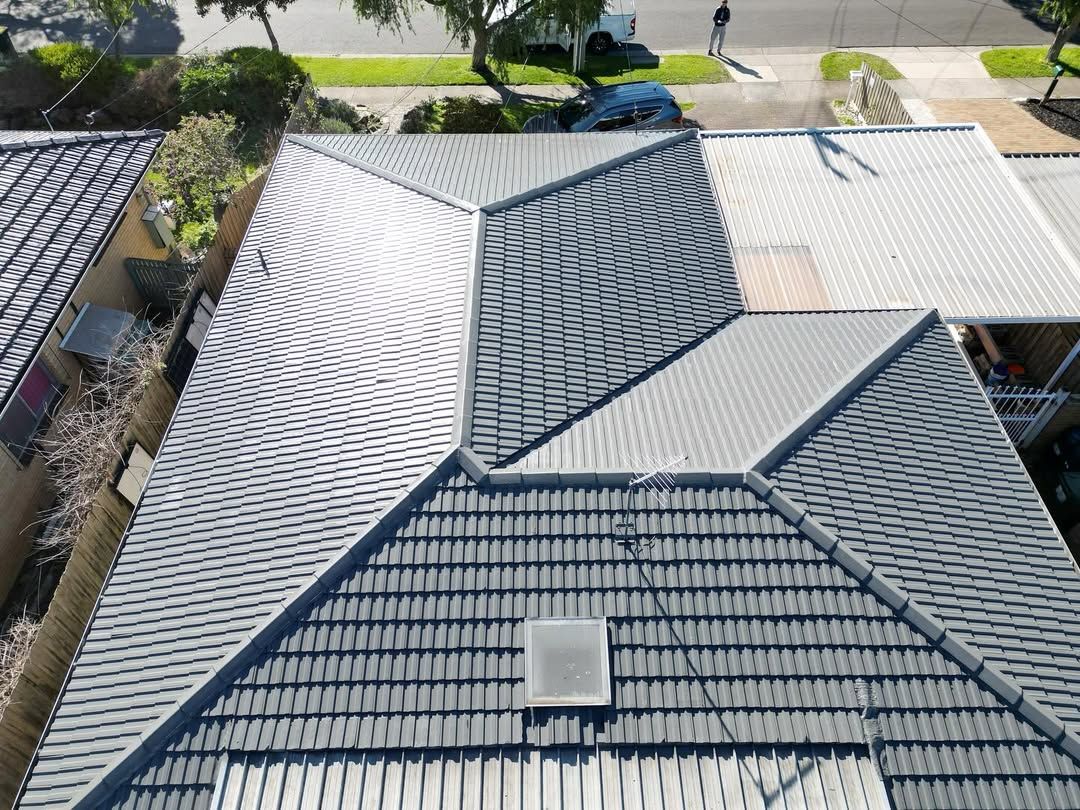
For a broader view of our restoration work before and after repainting, our photo gallery shows real Melbourne jobs across tiles, terracotta, cement, and Colorbond roofs.
Key Takeaways
Roof fading is a sign that the protective coating has broken down, not just an aesthetic issue. The five main causes are UV radiation breaking down paint bonds, oxidation turning the surface chalky, thermal movement cracking the coating, organic growth penetrating the tile, and the original paint system reaching the end of its service life. A chalky residue, patchy discolouration, or peeling paint are all signals to act before the problem becomes structural.
A professional repaint using a four-coat system, Maxi Primer plus three coats of Regent acrylic, rebuilds the protective layer properly and can deliver up to 20 years of colour and weathering protection. Colorbond roofs need a separate three-coat metal paint system with rust treatment, not the same product used on tiles. A free on-roof inspection is the most reliable way to understand what your roof needs and whether a paint-only scope or a full restoration is the right call.
If your roof is faded, chalky, or just overdue for proper attention, the first step is a free on-roof inspection. We come out, assess the condition, take photos, and give you a written quote with a clear scope, no obligation to book anything afterwards.
Ready to Restore Your Roof Colour?
If your roof is faded, chalky, or just overdue for proper attention, the first step is a free on-roof inspection. We come out, assess the condition, take photos, and give you a written quote with a clear scope, no obligation to book anything afterwards.
Call Melbourne Quality Roofing on 0466 885 133 or (03) 9540 8865, or get a free quote online to book your inspection.
FAQs
1. Why is my roof fading so quickly after being painted?
Rapid fading usually means the previous application used too few coats or a low-quality product without proper UV resistance. A single-coat or two-coat application without a primer base will not bond properly to the tile and will start breaking down within a few years. Our four-coat system with Maxi Primer is built to hold its colour for up to 20 years on a structurally sound roof, and the difference between systems becomes visible around year three to five.
2. Can I paint over a faded roof myself?
You can, but without professional-grade high-pressure washing, crack repair, and the right primer and paint combination, a DIY repaint almost always underperforms. The most common outcome we see is peeling or bubbling within two to three years, followed by a call to redo the job properly. The cost of doing it twice almost always exceeds the cost of a professional application done right the first time.
3. How long does a professional roof repaint last in Melbourne?
A four-coat repaint on a structurally sound roof is designed to last up to 20 years in Melbourne conditions. Cheaper single-coat applications typically fade and chalk again within three to five years. Annual or biannual inspections help with finding minor issues before they affect the paint system's longevity.
4. What is the chalky white dust on my roof tiles?
The chalky residue is oxidised paint. The binders in the paint film have broken down and the pigment is dispersing as a loose powder. Once you see this, the protective coating is no longer intact and the tile surface is exposed to direct moisture and UV. It is a clear indicator that repainting is needed, not just a cosmetic issue.
5. Does a faded roof affect my property value?
Yes. A visibly weathered, faded roof affects street appeal and can raise concerns for buyers and valuers about the broader maintenance of the property. A freshly repainted roof in a current, well-chosen colour can make a meaningful difference to how a home presents at sale, particularly combined with guttering that is clean and in good condition.
6. Is roof repainting the same as a full roof restoration?
Not exactly. Roof repainting is the painting stage of the process. A full roof restoration includes high-pressure cleaning, re-pointing of cracked mortar, ridge cap rebedding, tile replacement where needed, and then the full four-coat painting system. If your roof has fading plus cracking, loose ridges, or missing tiles, a full restoration is the right scope rather than painting alone.